
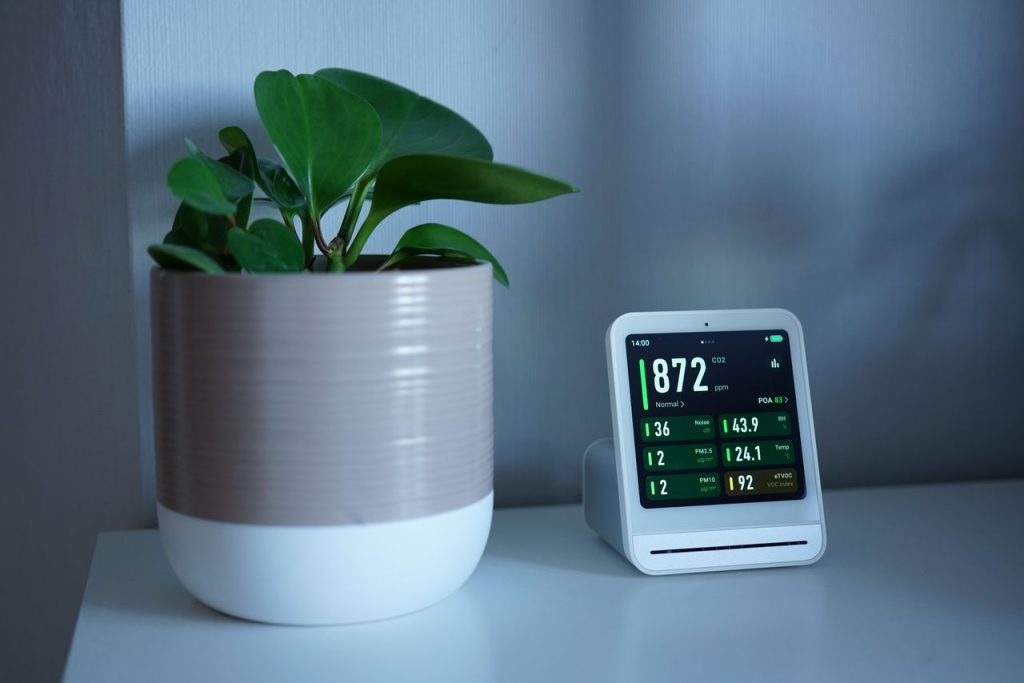
The air inside a home may look clean, smell fresh, and still contain pollutants that affect comfort and indoor air quality. From dust and pet dander to excess humidity and airborne chemicals, many potential air quality concerns are not visible to the naked eye. This is where home air quality sensors can be useful. But are they worth the investment?
What Do Air Quality Sensors Actually Measure?
Air quality sensors are designed to monitor certain conditions and pollutants inside your home. Depending on the model, they may measure:
- Particulate matter (PM2.5): Tiny airborne particles from cooking, smoke, dust, and other sources.
- Volatile organic compounds (VOCs): Gases released by certain paints, cleaning products, furnishings, and building materials.
- Carbon dioxide (CO2): A useful indicator of ventilation and occupancy-related buildup.
- Humidity and temperature: Conditions that can influence comfort, condensation, and mold growth.
Some devices monitor only one or two measurements, while more advanced models track several factors and provide readings through a smartphone app.
The Benefits of Monitoring Indoor Air Quality
One of the biggest advantages of an air quality sensor is awareness. Instead of guessing why a room feels stuffy or why indoor air seems uncomfortable, homeowners can use readings to identify patterns.
For example, elevated particle levels after cooking may indicate a need for better kitchen ventilation. High humidity readings could signal inadequate ventilation, moisture intrusion, or another condition worth investigating.
Sensors can also help homeowners evaluate whether improvements, such as using an air purifier or increasing ventilation, are making a measurable difference.
Are There Any Downsides?
While helpful, air quality sensors are not a substitute for professional inspections or specialized testing.
Consumer-grade devices vary considerably in accuracy, sensitivity, and reliability. Some provide estimates rather than precise measurements, and readings can be affected by sensor placement, maintenance, and surrounding conditions.
It is also important to understand what these devices cannot detect. Most do not reliably identify mold, asbestos, radon, or carbon monoxide. Separate, appropriately designed testing or detection equipment is necessary for these hazards.
Are They Worth Buying?
For homeowners interested in understanding and improving their indoor environment, an air quality sensor can be a worthwhile investment. Look for a reputable device that clearly identifies what it measures, provides understandable readings, and allows you to monitor changes over time.
However, the most valuable approach is to use sensor readings as a starting point, not a final diagnosis.
The Bottom Line
Air quality sensors can provide useful insight into conditions inside your home and help identify situations that deserve attention. They are not essential for every household, but they can be a practical tool for homeowners who want to make informed decisions about ventilation, moisture control, and indoor comfort.
Remember, good indoor air quality starts with identifying pollution sources, controlling moisture, and maintaining proper ventilation. Technology can help, but a healthy home still depends on addressing the underlying conditions.