
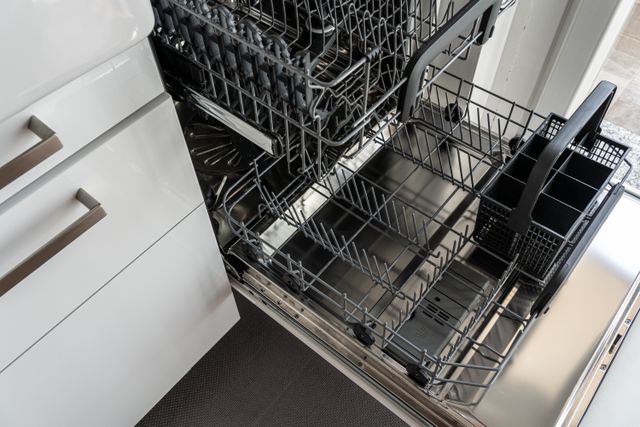
Your dishwasher spends a lot of time dealing with water, heat, food particles, and detergent. That makes routine maintenance more important than it may seem. A few simple checks can help keep the appliance running properly and, just as importantly, reduce the chance of a leak causing damage to cabinets, flooring, or nearby walls.
Start With the Door and Seal
The rubber gasket around the dishwasher door is one of the first places to check when looking for potential leaks. Food residue, grease, and cleaning products can build up along the seal and prevent it from making a tight connection.
Wipe the gasket periodically with a damp cloth and inspect it for cracks, tears, or sections that have become hard or misshapen. The door should close firmly without anything interfering with it. A large plate, utensil, or other item sticking out from the rack can prevent a proper seal and allow water to escape.
Don’t Ignore the Filter
The filter at the bottom of the dishwasher catches bits of food and other debris. When it becomes heavily coated, water may not circulate or drain as efficiently as it should.
Remove and rinse the filter as recommended by the appliance manufacturer. A soft brush can be useful for removing buildup. Avoid using excessive force, particularly if the filter has a locking mechanism.
A clean filter can also help reduce unpleasant smells and prevent food particles from being redeposited on dishes.
Pay Attention to Drainage
Once a cycle finishes, check the bottom of the dishwasher. Depending on the appliance, a small amount of water may be normal in certain areas. However, significant standing water can indicate a drainage problem.
Look for food debris around the drain and check any visible drain hose for kinks or crushing. If the dishwasher drains through a garbage disposal, the connection should also be checked, particularly after a new disposal has been installed.
If water consistently remains in the tub, the problem may involve the drain hose, pump, or another component and should be properly diagnosed rather than repeatedly worked around.
Look for Early Signs of a Leak
It is worth occasionally checking beneath and around the dishwasher for moisture. Look at the floor, the sides of the cabinet, and any accessible plumbing connections for dampness, staining, swelling, corrosion, or a musty odor.
A small leak can be deceptive. Water may travel underneath flooring or soak into cabinetry before there is enough visible evidence to make the problem obvious.
Use Dishwasher Detergent Only
Never substitute ordinary liquid dish soap for automatic dishwasher detergent. Regular dish soap produces far more suds and can cause an overflow.
Use the detergent specified for the appliance and follow the recommended amount. Using extra detergent will not necessarily improve cleaning and may leave behind unwanted residue.
Preventive Care Is Worth the Effort
A dishwasher does not require complicated maintenance, but it does benefit from regular attention. Cleaning the filter, inspecting the door gasket, checking drainage, and looking for early moisture can help identify problems before they become expensive repairs.
If the appliance continues to leak, fails to drain, or develops unusual operating problems, don’t simply keep cleaning up the symptoms. Finding and correcting the underlying issue is the best way to protect both the dishwasher and the surrounding home.