
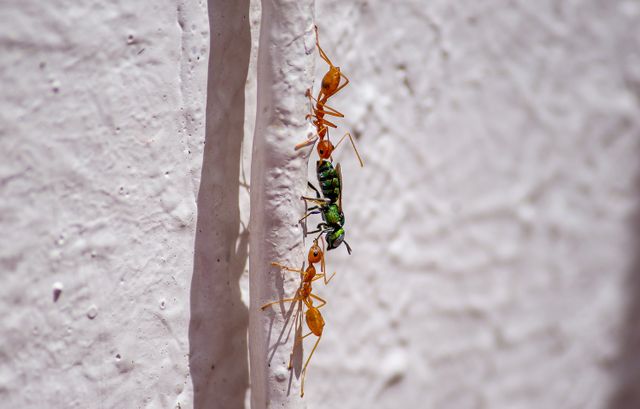
Few household pests are as persistent as ants. It often starts with a single trail across the kitchen floor or countertop, but those few ants are usually just the visible portion of a much larger colony. The good news is that an ant problem can often be managed successfully by identifying where they are coming from and addressing the conditions that attracted them in the first place.
Why Ants Enter Homes
Ants are constantly searching for food, water, and shelter. Even the smallest crumbs, sugary spills, pet food, or standing moisture can attract foraging ants. Once a food source is found, they leave behind a chemical trail that guides other ants directly to it, quickly turning a minor sighting into a steady stream.
Changes in weather can also increase activity. During periods of heavy rain, drought, or extreme heat, ants often move indoors in search of more favorable conditions.
How to Locate the Source
The most effective way to deal with ants is to find where they are entering the home.
Watch the trail rather than simply removing the ants you see. Following the line of ants can often reveal an entry point around:
- Window and door frames
- Utility penetrations for plumbing or electrical lines
- Foundation cracks
- Gaps around siding or exterior trim
- Damaged weatherstripping
Outside, inspect the home’s perimeter for ant hills, mulch beds, landscape timbers, tree stumps, or shrubs touching the structure. Branches and vegetation can act as convenient bridges, allowing ants to bypass barriers and enter more easily.
Inside, pay close attention to kitchens, bathrooms, laundry rooms, and basements where moisture and food are commonly available.
Preventing Future Infestations
Long-term prevention focuses on making the home less inviting.
Eliminate Food Sources
Store pantry items in sealed containers, wipe up spills promptly, clean under appliances regularly, and avoid leaving dirty dishes in the sink overnight. Pet food should not remain out longer than necessary.
Reduce Moisture
Repair leaking faucets, plumbing fixtures, and pipes. Improve ventilation in damp areas and address standing water around the foundation whenever possible.
Seal Entry Points
Use quality caulk or appropriate sealants to close small cracks and gaps around windows, doors, utility penetrations, and foundation openings. Replacing worn weatherstripping can also help reduce easy access.
Maintain the Exterior
Trim shrubs, tree limbs, and other vegetation so they no longer touch the home. Keep mulch from being piled directly against the foundation, and remove decaying wood or debris that may provide nesting locations.
When Additional Action Is Needed
If ant activity continues despite good sanitation and sealing efforts, the colony may be established inside wall voids or beneath the structure. In these situations, targeted bait products are often more effective than sprays because worker ants carry the bait back to the colony, helping eliminate the source rather than simply killing visible ants.
Persistent infestations or recurring activity in multiple areas may warrant a professional evaluation to identify hidden entry points, moisture issues, or structural conditions contributing to the problem.
Final Thoughts
Ants are a common household nuisance, but they are also highly predictable. Finding where they are entering, removing the conditions that attract them, and sealing potential access points are the most effective steps for lasting control. A careful inspection combined with routine home maintenance can go a long way toward keeping ants where they belong—outside.